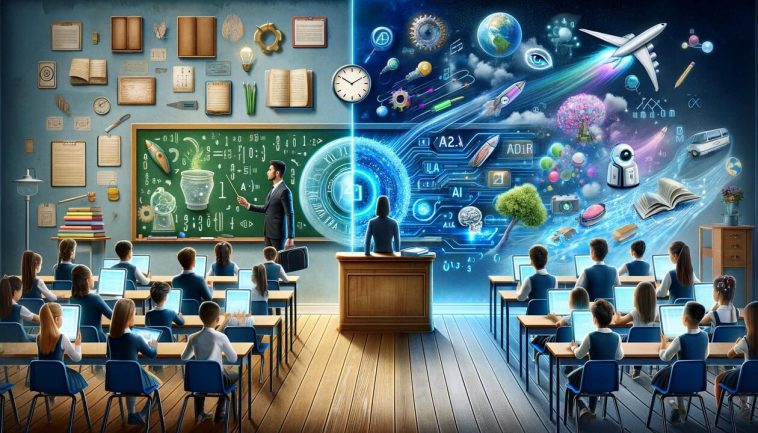
Teaching just got a powerful upgrade. Here are the best AI tools helping educators save time, engage students, and transform the classroom in 2026.
Teaching has always been one of the most demanding professions in the world. Between lesson planning, marking, parent communication, administrative work, and actually standing in front of a classroom full of students — the workload never really stops. But in 2026, something significant is shifting.
Artificial intelligence is stepping in as the ultimate teaching assistant — one that never calls in sick, works at any hour, and can handle dozens of tasks simultaneously. From generating lesson plans in minutes to providing personalised feedback for every student in the class, AI tools for teachers are no longer a novelty. They are rapidly becoming a necessity.
This guide covers the best AI tools available to educators right now — whether you teach primary school, secondary school, or higher education. Each tool has been selected for its genuine usefulness, accessibility, and proven impact in real classroom environments.
Why AI in Education Matters More Than Ever in 2026
The conversation around AI in education 2026 has moved well beyond the experimental phase. Schools and universities across the US and UK are actively integrating AI into their teaching infrastructure, and the results are hard to ignore.
Teachers using AI tools report spending significantly less time on administrative tasks and more time doing what they actually love — teaching. Students, meanwhile, are benefiting from more personalised learning experiences that adapt to their individual pace and learning style.
That said, AI works best as a complement to great teaching, not a replacement for it. The most effective educators in 2026 are those who understand how to use these tools strategically — to enhance their impact rather than replace their judgment.
Here are the tools leading that charge.
AI Tools for Teachers
1. ChatGPT — Best All-Round Teaching Assistant
No list of AI classroom tools would be complete without ChatGPT. For teachers, it functions as an endlessly patient assistant that can help with almost any task at any time of day.
Need to create a quiz on the French Revolution in the next 20 minutes? Done. Want to differentiate a reading passage for three different ability levels? Easy. Struggling to write a professional but warm email to a parent? ChatGPT handles it in seconds.
The real power for teachers lies in how specific you can get. Ask it to create a lesson plan aligned to your specific curriculum framework, and it will deliver a solid starting point that you can refine and personalise.
The free version is genuinely useful, while the paid tier adds file analysis, advanced reasoning, and the ability to upload your own curriculum documents for more tailored outputs.
Best for: Lesson planning, differentiation, quiz creation, parent communication, and report writing support.
2. MagicSchool AI — Best Purpose-Built Tool for Educators
If ChatGPT is the general-purpose option, MagicSchool AI is the tool built specifically with teachers in mind. Launched with educators at its core, it offers over 60 purpose-built tools covering everything from lesson plans and rubrics to IEP accommodation suggestions and behavioural email drafts.
The interface is clean, intuitive, and requires no technical knowledge whatsoever. You simply choose the tool you need, fill in a few details about your subject, year group, and learning objective, and the AI generates a professional result in seconds.
In 2026, MagicSchool AI has become one of the most recommended ChatGPT for teaching alternatives precisely because it removes the need to craft complex prompts — it does that work for you.
Best for: Rubric creation, IEP support, lesson planning, report comments, and parent communication.
3. Diffit — Best for Differentiated Resources
One of the biggest challenges in any classroom is catering to students with vastly different reading levels and learning needs. Diffit solves this problem elegantly. You input any topic, article, or concept, and Diffit generates reading materials at multiple difficulty levels — complete with comprehension questions, vocabulary lists, and discussion prompts.
For teachers supporting students with special educational needs, English language learners, or simply a wide ability range in one classroom, this tool is a genuine game-changer. What used to take hours of manual adaptation now takes under two minutes.
Best for: SEN support, EAL students, mixed-ability classrooms, and reading comprehension resources.
4. Grammarly — Best for Teacher Written Communication
Teachers write constantly — reports, newsletters, emails, feedback comments, grant applications. Grammarly’s AI-powered writing assistant ensures that everything leaving your desk is polished, professional, and clear.
Beyond basic spelling and grammar, Grammarly in 2026 offers tone detection, clarity rewrites, and style suggestions that are particularly useful when writing report card comments or sensitive parent communications where the right tone matters enormously.
It integrates seamlessly with Gmail, Google Docs, and Microsoft Word — the platforms most teachers already use every day — making it one of the most frictionless education technology AI tools available.
Best for: Report writing, parent emails, newsletters, feedback comments, and professional correspondence.
5. Canva AI — Best for Visual Learning Materials
Great teaching is often visual, and Canva’s AI-powered design tools make it easier than ever to create beautiful, engaging classroom resources without any design experience.
In 2026, Canva’s AI features include text-to-image generation, automatic presentation design, and smart layout suggestions. Teachers can create stunning worksheets, classroom displays, slide presentations, and infographics in a fraction of the time it would take manually.
The education plan is free for teachers and students, which makes it one of the most accessible and valuable tools on this entire list.
Best for: Presentations, worksheets, classroom displays, infographics, and visual learning aids.
6. Formative — Best for Real-Time Student Assessment
Understanding where your students are in their learning — in real time, during a lesson — is one of the most powerful things a teacher can do. Formative uses AI to help teachers build interactive assessments and then analyses student responses as they come in, flagging misconceptions and highlighting which students need immediate support.
Rather than waiting until you’ve marked a set of books at 10pm to discover half the class misunderstood a key concept, Formative shows you that information live, so you can adjust your teaching on the spot.
Best for: Formative assessment, live feedback, identifying misconceptions, and data-driven teaching.
7. Otter.ai — Best for Meetings and CPD Notes
Staff meetings, parent consultations, continuing professional development sessions — teachers sit through a lot of conversations that generate important information. Otter.ai transcribes these in real time, creates summaries, and lets you search back through recordings effortlessly.
For heads of department or senior leaders managing multiple meetings a week, this tool alone can save hours of note-taking and follow-up time every single week.
Best for: Staff meetings, parent consultations, CPD sessions, and professional note-taking.
Getting Started With AI as a Teacher
If you’re new to using AI in your practice, the most important thing is to start simple. Pick one tool from this list that addresses your biggest current pain point and spend a week getting comfortable with it before adding anything else.
Here are a few principles that will help:
Be specific in your prompts. Tell the AI your subject, year group, ability level, and learning objective. The more context you give, the more useful the output.
Always review and personalise. AI outputs are starting points, not finished products. Your professional judgment, knowledge of your students, and teaching style should always shape the final result.
Share what works. The teachers getting the most from AI in 2026 are sharing their best prompts and workflows with colleagues. A culture of AI literacy in your school benefits everyone.
Final Thoughts
The best AI tools for teachers in 2026 aren’t here to replace what makes great teaching great — the relationships, the empathy, the instinct for when a student needs encouragement versus challenge. They’re here to handle the parts of teaching that drain your energy and steal your time.
Used well, these tools give you something genuinely precious: more time and mental space to focus on your students.
And that, ultimately, is what great teaching has always been about.