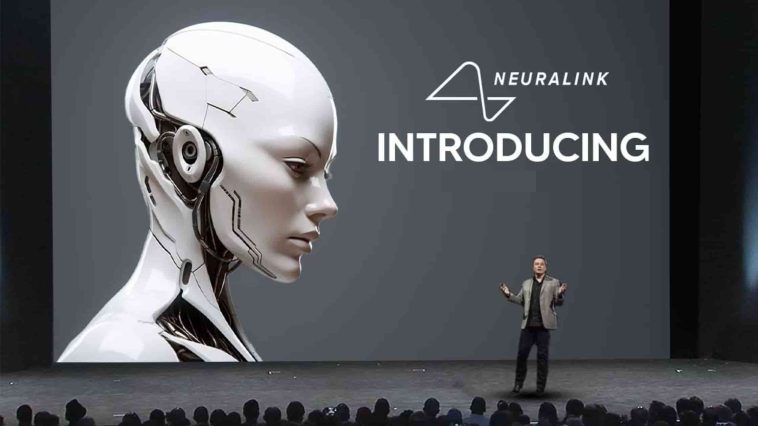
Neuralink, the neurotechnology company co-founded by Elon Musk in 2016, is one of the most revolutionary projects in science and technology today. It aims to merge the human brain with computers by using an advanced brain-computer interface (BCI). In 2025, the company has reached a major milestone: the first successful human implantation of its device.
This article breaks down what Elon Musk’s Neuralink is, how it works, its achievements so far, and what the future may hold.
What is Neuralink?
Neuralink Corporation is a neurotechnology company that designs and develops implantable BCIs. The goal of the company is to create a direct communication link between the brain and external devices, allowing for real-time interaction between humans and computers. Elon Musk has stated that Neuralink could eventually help people with neurological disorders and enable humans to stay competitive with artificial intelligence.
What does Neuralink do?
1. The Chip (N1 Implant)
Neuralink’s main product is a small coin-sized chip called the N1 implant. This device is designed to be embedded in the skull and connected to the brain via ultra-thin threads. These threads contain electrodes that monitor electrical activity in the brain and can also stimulate neurons.
2. Neural Threads
The chip connects to the brain through tiny threads, each thinner than a human hair. These threads can detect and record brain signals and are flexible enough to move with the brain, reducing the risk of damage.
3. Surgical Robot
Neuralink has built a special surgical robot to implant the device safely. This robot is capable of inserting the threads with microscopic precision while avoiding blood vessels to minimize bleeding and trauma.
4. Wireless Connection
Once implanted, the chip communicates wirelessly with a smartphone or computer. It can send brain data in real time and potentially receive signals back from devices.
Neuralink’s Key Milestones
2016–2020: Foundation and Animal Testing
Neuralink was founded in 2016 but remained in stealth mode for a few years. In 2019, the company presented its first prototype to the public. By 2020, Neuralink had demonstrated a pig named Gertrude with a working brain implant that could transmit real-time neural activity.
2021: Monkey Plays Pong
In 2021, Neuralink released a video showing a monkey named Pager playing the video game Pong using only its brain. The monkey had two Neuralink implants and was able to control the game without touching a joystick, using brain signals alone.
2023: FDA Approval
After several years of animal testing and engineering refinements, Neuralink received FDA approval in 2023 to begin human trials. This was a significant step toward proving the technology’s safety for human use.
2024: First Human Implant
In January 2024, Elon Musk announced that the first human received a Neuralink implant. The patient reportedly experienced no side effects and was able to move a computer cursor with their thoughts—a massive breakthrough for the field.
Applications of Neuralink
Neuralink is not just a futuristic fantasy. It has real potential to transform medicine, technology, and even human capabilities.
🔹 Medical Use Cases
- Paralysis: Individuals with spinal cord injuries could regain control of devices like phones or computers.
- Blindness: Future versions may stimulate the visual cortex to restore vision.
- Deafness: Could connect directly to the auditory cortex to provide sound.
- Parkinson’s Disease: Deep brain stimulation may help reduce symptoms.
- Mental Health: Potential applications for treating depression, anxiety, PTSD, and addiction.
🔹 Human-Computer Interface
Neuralink may one day allow people to:
- Type or write using thoughts alone
- Control smart home devices
- Communicate silently, brain-to-brain
- Interact with artificial intelligence seamlessly
🔹 Cognitive Enhancement
Musk’s long-term vision is to allow humans to enhance brain function, memory, or even learning abilities using software connected directly to the brain.
Latest News Related to Neuralink
💰 Neuralink’s $650 Million Series E Funding Round
Announced on June 2, 2025, Neuralink’s latest funding round attracted major investors, including ARK Invest, Sequoia Capital, Thrive Capital, Founders Fund, DFJ Growth, and G42. This infusion of capital elevates Neuralink’s valuation to approximately $9 billion, underscoring strong investor confidence in the company’s mission to develop advanced brain-machine interfaces
🧠 Advancing Clinical Trials
The newly acquired funds are earmarked to accelerate Neuralink’s ongoing clinical trials and expand access to its brain implant technology. Currently, the company is conducting trials in three countries, focusing on patients with severe paralysis. These trials aim to enable individuals to control digital and physical devices using their thoughts, thereby restoring independence and enhancing quality of life.
Neuralink’s brain implant device has received the U.S. Food and Drug Administration’s (FDA) “breakthrough” designation for its speech restoration capabilities, adding to a similar designation previously granted for its vision-restoring device. The FDA’s breakthrough devices program is designed to expedite the development and approval of medical devices that offer significant therapeutic potential.
🌐 Global Expansion and Future Outlook
With this substantial funding, Neuralink plans to broaden its clinical trials globally and continue developing innovative devices that deepen the connection between biological and artificial intelligence. The company’s long-term vision includes creating high-bandwidth, minimally invasive brain-machine interfaces that can address various neurological disorders and potentially enhance human capabilities.
Ethical and Safety Concerns
As exciting as Neuralink sounds, there are several serious ethical and medical concerns:
🧠 Invasive Procedure
Although Neuralink aims to make the procedure minimally invasive, it still involves brain surgery. There’s always risk of infection, bleeding, or complications from hardware failure.
🔐 Privacy and Data Security
Brain data is highly personal. Questions arise like:
- Who owns the brain data?
- Could brain activity be hacked or tracked?
- How is consent handled?
⚖️ Ethics of Enhancement
Neuralink could widen social inequalities. Will only the wealthy be able to afford brain upgrades? Should cognitive enhancement be allowed in healthy people?
🧪 Long-Term Effects
Since Neuralink is still in early testing phases, the long-term biological and psychological effects of brain implants are unknown.
How Neuralink Differs from its Competitors (Other BCI Projects )
Neuralink is not the only company working on brain-computer interfaces. Others include:
- Synchron – Uses less invasive methods via blood vessels but offers lower bandwidth.
- Blackrock Neurotech – Focuses on high-resolution BCIs for research and medical applications.
- Kernel – Builds non-invasive BCIs for cognitive monitoring.
What sets Neuralink apart:
- Higher data bandwidth (more neurons monitored)
- Ultra-thin, flexible threads
- Fully wireless system
- Advanced surgical robot
- Backing from Elon Musk and significant funding
Future of Neuralink?
In 2025 and beyond, Neuralink plans to:
- Expand its human trials to more patients
- Improve chip performance and lifespan
- Reduce the cost and time of surgical procedures
- Seek regulatory approval for medical applications
- Explore non-medical enhancements and broader commercial use
Elon Musk has said he hopes the technology will eventually be as common as LASIK eye surgery.
Conclusion
Neuralink is a bold and futuristic project that has the potential to revolutionize the way humans interact with technology and treat neurological conditions. In 2025, the company has already achieved what was once science fiction: a person controlling a computer with their thoughts.
While there are still many hurdles ahead—technical, ethical, and medical—Neuralink represents a giant leap in brain-computer interface technology. If successful, it could help millions of people with disabilities, enhance human capabilities, and ultimately reshape the future of humanity.
Whether this future will be a utopia of mind-powered innovation or a dystopia of digital control depends on how society chooses to use this incredible technology.
Read More
- Great Digital Marketing Tools to Boost Your Business
- Google I/O 2025
- Top AI Tools in 2025
- New Apple’s Glasses Will Change Everything
- OpenAI Chat GPT: A Deep Dive into the Technology and Applications